Search

Tuesday, September 22, 2015

Lobbying Congress

"The Most Permeable Branch"
ACCESS: Rep. Debbie Wasserman Schultz (D-FL) says that if she finds 30 phone messages, "of the thirty, you're going to know ten of them. Anyone is going to make phone calls to the people they know first.  I'm going to call the people I know. Among the people I know are donors."

The lay of the land"
This video is hokey and stagy but basically accurate:


Monday, September 21, 2015

ProPublica: "How Senate Hopefuls Keep Donors Secret From Voters Until It's Too Late"

Thoughts and Qs on two points from the ProPublica article "How Senate Hopefuls Keep Donors Secret From Voters Until It's Too Late"

Electronic vs. Paper Filings
Since December 2000, presidential and House candidates have had to file campaign reports electronically to the Federal Election Commission, meaning the public, journalists and analysts can see donors and recipients within minutes. The language in the 2000 law, though, didn’t cover Senate candidates.
As a result the Senate uses a paper system that hasn’t changed much since 1972: Filings are mailed, faxed or delivered by hand to the Secretary of the Senate. The paperwork, which can involve thousands of pages in a big race, is then passed to the FEC, which pays to have the documents scanned and posted online. The information in the reports is typed into a computer so the data can be published for researchers and journalists. The whole process costs the FEC up to $500,000 a year, the Congressional Budget Office has said.
The cumbersome process means information about fundraising and spending isn’t available for days or sometimes more than a week after the reports are due – and then in a format that isn’t easily searchable. In the final weeks before an election, voters may have only a few days to look through hundreds of pages of filings in key races. This isn’t new: a Campaign Finance Institute analysis in 2004 showed that “voters preparing to go to the polls last November did not know where a large amount of money to elect their Senators for the next six years was coming from.”
Right off the bat, the most troubling thing is how much time this whole process must waste. Those Hill interns will never get those hours back. But, I'm curious if the switch to electronic filings would make that big of a difference. At the point when filings are due, I would presume that most voters have already made up their minds. How effective are last minute oppo efforts?

Also, #tbt to this testimony from 2007 (apparently there was bipartisan support?).

Removing Limits on Coordinated Spending
But as coordinated spending has fallen, the rise of super PACS and nonprofits that funnel cash outside of the party apparatus has transformed campaign finance and rendered limits on party spending irrelevant, say analysts including Thomas E. Mann, a senior fellow at the Brookings Institution. 
“It’s silly for parties to have to set up independent spending operations” in the new world of super PACs and nonprofits, said Mann, who testified before a Senate committee in 2007 in support of removing the coordinated spending limit.  
Daniel Weiner, an attorney at the Brennan Center for Justice at New York University, who advocates for stricter campaign finance rules, also supports the general notion of eliminating caps on coordinated party spending. He said removing limits would likely divert some outside spending back into the party structure, which he said would be healthier for democracy because it could diminish the influence of super PACs and so-called dark money. Compared to independent groups, he said, parties are more internally democratic and accountable to the public because they’re “repeat players.”
Independent expenditures by parties wouldn’t disappear entirely, Weiner said. In scenarios where candidates want to maintain plausible deniability over an expense – an attack ad, for example – parties would likely still opt to go it alone. 
I'm not sure if Weiner's claim is true. What's the incentive for a wealthy executive to donate directly to the parties when the option to set up a PAC/501(c) exists?

Thursday, September 17, 2015

Lobbying and the Capital Community

Brookings

Philanthropy as "Deep Lobbying"

Comcast rents friends

The Financial Services Institute cites a letter that it ghostwrote

Corporations and the State Department  -- the example of Boeing

The Revolving Door

The California exit

First Assignment, Fall 2015

Pick one of the items below. (In all of these items, recent means "since January 2013.")
  • Holyoke says: "It is always easier to lobby against a proposal than for it: (p. 157). Explain, and illustrate the point by analyzing a successful lobbying campaign against a recent proposal before Congress. 
  • Look at who lobbied on the Trans-Pacific Partnership. Pick one organization that lobbied for, and one that lobbied against. Explain their positions. How effective were they? 
  • In chapter 7, Holyoke discusses rulemaking. Explain the outcome of a recent fight over an administrative rule. 
  • Pick an amicus brief in a case that the Supreme Court has recently decided. Who filed it? Why? Explain the brief's argument. Why do you think that it was or was not effective? 
Instructions:
  • Document your claims. Do not write from the top of your head. 
  • Essays should be typed (12-point), double-spaced, and no more than three pages long. I will not read past the third page. 
  • Cite your sources with endnotes in Chicago/Turabian style. Endnote pages do not count against the page limit. 
  • Watch your spelling, grammar, diction, and punctuation. Errors will count against you. 
  • Turn in essays to the class Sakai dropbox by 11:59 PM, Friday, October 2. Late essays will drop a gradepoint for one day’s lateness, a full letter grade after that. I will grant no extensions except for illness or emergency.

Thursday, September 10, 2015

Interest Groups, Movements, Factions, and Rackets

Yep, the NFL is an interest group.

So is the NCAA.

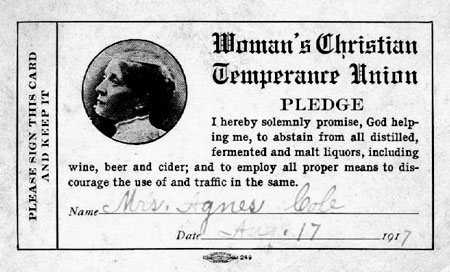
Social movements and religion
The fate of social movements: "What starts out here as a mass movement ends up as a racket, a cult or a corporation." -- Eric Hoffer
Online organizing

Madison on faction
The latent causes of faction are thus sown in the nature of man; and we see them everywhere brought into different degrees of activity, according to the different circumstances of civil society. A zeal for different opinions concerning religion, concerning government, and many other points, as well of speculation as of practice; an attachment to different leaders ambitiously contending for pre-eminence and power; or to persons of other descriptions whose fortunes have been interesting to the human passions, have, in turn, divided mankind into parties, inflamed them with mutual animosity, and rendered them much more disposed to vex and oppress each other than to co-operate for their common good. So strong is this propensity of mankind to fall into mutual animosities, that where no substantial occasion presents itself, the most frivolous and fanciful distinctions have been sufficient to kindle their unfriendly passions and excite their most violent conflicts. But the most common and durable source of factions has been the various and unequal distribution of property. 
Factions and the Tea Party


Wednesday, September 9, 2015

NFL lobbyists go on offense

     
      "After a tough year in the headlines, and with a major movie about football concussions arriving in theaters this Christmas, the NFL is going on offense this fall with Washington policymakers—starting with a series of closed-door meetings with key House and Senate committees this week.
      Cynthia Hogan, the league’s top lobbyist and a former senior attorney to Vice President Joe Biden, told POLITICO the NFL would be briefing the House Energy and Commerce Committee and Senate Commerce Committee on player safety and pro football’s new efforts to pay for research into head injuries. The two panels have jurisdiction over sports-related commercial issues...
      The NFL has the only full-time lobbying operation run by a major sports league in Washington, a four-person shop that moved last December into new downtown offices about six blocks from the White House, sharing space with Covington& Burling, which is also the main outside law firm for the league.
      The lobbying shop hasn’t lacked work.  In the past few years, the NFL has come under fire from lawmakers who have criticized the sport’s violence, Commissioner Roger Goodell’s handling of player discipline, and the offensive implications of the Washington Redskins’ nickname. Several Democratic senators have led the charge, from Barbara Boxer and Dianne Feinstein demanding a "zero-tolerance policy" for players who commit domestic violence to Maria Cantwell and Harry Reid pressuring Goodell into taking a stand on whether the Redskins should drop their mascot."


Full story here.