Thursday, November 29, 2018

Guns and Poses
Common Cause
A nonprofit
Climate Change
A dissert from Spitzer's argument
1871 Union veterans found NRA because they are disappointed by the lack of marksmanship by their troops. The goal of the group was to “promote and encourage rifle shooting on a scientific basis,” one of the veterans wrote in a magazine editorial, according to the NRA.
US v. Cruikshank (1876) -- limits reach of Second Amendment
1927 — Congress passes the “Nonmailable Firearms Act of 1927, making it illegal to use the U.S. mail to ship “pistols, revolvers, and other firearms capable of being concealed on the person.”
1934 — The National Firearms Act, the first comprehensive federal gun control legislation, is enacted, aimed at cracking down on the bloody gangland era of Al Capone, John Dillinger and others. The law imposed a $200 tax, which was considered prohibitive at the time, on machine guns and shotguns and rifles with barrels shorter than 18 inches. It also required the federal registration of these types of firearms.
>
1
938 — The Federal Firearms Act of 1938 takes effect, requiring firearms licenses for gun dealers, manufacturers and importers.
1939 — The U.S. Supreme Court, in U.S. v. Miller, rules that a short-barrel shotgun is not a weapon protected under the Second Amendment.
1968 — The assassinations of President John F. Kennedy, the Rev. Martin Luther King and Sen. Robert Kennedy lead to the Gun Control Act of 1968. It created new categories of firearms crimes, banned the sale of firearms and ammunition to felons and other prohibited groups of people, and imposed federal jurisdiction over “destructive devices,” including bombs and grenades, according to the Bureau of Alcohol, Tobacco, Firearms and Explosives.
1986 — The Firearm Owners’ Protection Act amends the 1968 law, relaxing some gun control measures.
1993 — The Brady Handgun Violence Prevention Act of 1993 requires federal background checks before a firearm can be purchased from a federally licensed dealer, manufacturer or importer. The National Instant Criminal Background Check System, which is maintained by the FBI, conducts the checks. The law is named after James Brady, who was seriously wounded in an assassination attempt on President Ronald Reagan in 1981 when he was serving as White House press secretary. Reagan and two others also were shot. Brady died in 2014.
1994 — Congress passes a 10-year ban on the manufacture, transfer and possession of new semi-automatic assault weapons. The measure applied only to weapons manufactured after the ban was enacted, and it expired in 2004. Numerous efforts to renew it have failed.
2003 — The Tiahrt Amendment, proposed by Todd Tiahrt, a Kansas Republican, bars the ATF from publicly releasing information about where criminals bought their firearms.
2005 — President George W. Bush signs the Protection of Lawful Commerce in Arms Act, prohibiting gun manufacturers and dealers from being named in civil lawsuits in federal and state courts when crimes are committed involving their firearms.
2008 — In the District of Columbia v. Heller, the U.S. Supreme Court rules that Americans have a constitutional right to keep handguns and commonly used firearms in their homes for self-defense.
A nonprofit
Climate Change
A dissert from Spitzer's argument
1871 Union veterans found NRA because they are disappointed by the lack of marksmanship by their troops. The goal of the group was to “promote and encourage rifle shooting on a scientific basis,” one of the veterans wrote in a magazine editorial, according to the NRA.
US v. Cruikshank (1876) -- limits reach of Second Amendment
A bit of history that gun advocates like to point out:
1927 — Congress passes the “Nonmailable Firearms Act of 1927, making it illegal to use the U.S. mail to ship “pistols, revolvers, and other firearms capable of being concealed on the person.”
1934 — The National Firearms Act, the first comprehensive federal gun control legislation, is enacted, aimed at cracking down on the bloody gangland era of Al Capone, John Dillinger and others. The law imposed a $200 tax, which was considered prohibitive at the time, on machine guns and shotguns and rifles with barrels shorter than 18 inches. It also required the federal registration of these types of firearms.
>
1
938 — The Federal Firearms Act of 1938 takes effect, requiring firearms licenses for gun dealers, manufacturers and importers.
1939 — The U.S. Supreme Court, in U.S. v. Miller, rules that a short-barrel shotgun is not a weapon protected under the Second Amendment.
1968 — The assassinations of President John F. Kennedy, the Rev. Martin Luther King and Sen. Robert Kennedy lead to the Gun Control Act of 1968. It created new categories of firearms crimes, banned the sale of firearms and ammunition to felons and other prohibited groups of people, and imposed federal jurisdiction over “destructive devices,” including bombs and grenades, according to the Bureau of Alcohol, Tobacco, Firearms and Explosives.
1986 — The Firearm Owners’ Protection Act amends the 1968 law, relaxing some gun control measures.
1993 — The Brady Handgun Violence Prevention Act of 1993 requires federal background checks before a firearm can be purchased from a federally licensed dealer, manufacturer or importer. The National Instant Criminal Background Check System, which is maintained by the FBI, conducts the checks. The law is named after James Brady, who was seriously wounded in an assassination attempt on President Ronald Reagan in 1981 when he was serving as White House press secretary. Reagan and two others also were shot. Brady died in 2014.
1994 — Congress passes a 10-year ban on the manufacture, transfer and possession of new semi-automatic assault weapons. The measure applied only to weapons manufactured after the ban was enacted, and it expired in 2004. Numerous efforts to renew it have failed.
2003 — The Tiahrt Amendment, proposed by Todd Tiahrt, a Kansas Republican, bars the ATF from publicly releasing information about where criminals bought their firearms.
2005 — President George W. Bush signs the Protection of Lawful Commerce in Arms Act, prohibiting gun manufacturers and dealers from being named in civil lawsuits in federal and state courts when crimes are committed involving their firearms.
2008 — In the District of Columbia v. Heller, the U.S. Supreme Court rules that Americans have a constitutional right to keep handguns and commonly used firearms in their homes for self-defense.
Last Assignment
Pick one of the items below.
- Write an update to chapter 10 of the DiSalvo book. Explain developments since its 2015 publication that bear on its analysis and conclusions.
- Pick an organization that plays a big role in the debate over firearms. What top priorities should it pursue in 2019? Explain what strategies and tactics it should employ. (Your answer may involve legislation, regulation, litigation, or public relations.)
- Berry and Wilcox (p. 239) write that government "should ensure that disadvantaged sectors of society that are inadequately represented by interest groups receive support to improve their representation in the political process." Identify an example (not including campaign finance) of a program to do so. (See here for ideas. Also see here and here.) Appraise and explain how it fared.
- Pick any topic related to the course readings, subject to my approval.
- Document your claims. Do not write from the top of your head.
- Essays should be typed (12-point), double-spaced, and no more than four pages long. I will not read past the fourth page. Please submit papers as Word documents, not pdfs.
- Cite your sources with endnotes in Chicago/Turabian style. Endnote pages do not count against the page limit.
- Watch your spelling, grammar, diction, and punctuation. Errors will count against you.
- Turn in essays to the class Sakai dropbox by 11:59 PM, Friday, December 14. I reserve the right to dock late essays a gradepoint for one day’s lateness, a full letter grade after that.
Welcome to Capitol Hill, Where the Revolving Door Never Stops
Lobbyists are greeting the new House majority. Theodoric Meyer and Marianne Levine at Politico:
House Minority Leader Nancy Pelosi has yet to officially secure the speaker’s gavel, and it’s still unclear which newly elected members of Congress will land key committee slots or other positions of power in next year’s Democratic House. But after a midterm campaign in which prominent progressives refused to take corporate donations — and with Democrats weighing new ethics and lobbying rules in 2019 — lobbyists are trying to get a jump-start on buddying up to members of the new majority.
Amazon announced Wednesday that it had hired two former chiefs of staff to members of the Congressional Black Caucus, Reps. G.K. Butterfield (D-N.C.) and Yvette Clarke (D-N.Y.).
Samsung, Lyft, Spotify and Diageo, the liquor company that makes Captain Morgan rum and Smirnoff vodka, hosted a mixer the week after Election Day that drew half a dozen newly elected Democrats, according to a person who attended. Pelosi and Rep. Steny Hoyer (D-Md.), who was elected House majority leader on Wednesday, and congressional staffers showed up, too.
...
Oscar Ramirez, a Democratic lobbyist who started his own firm with two partners earlier this year, said he and his partners had helped at least half a dozen House candidates who were elected this month. He’s now offering advice to them on which staffers to hire and which committees to try to join.
“We’ve had relationships with some of these new members now for over a year,” Ramirez said. “We were helping them get elected.”
Lobbyists are closely tracking who Democrats are hiring to staff their offices and committees: “Who’s going to be the staff director? Who’s going to be the deputy staff director?” as one lobbyist put it.
...
There were 19 former Pelosi staffers who were active registered lobbyists in 2018, according to the Center for Responsive Politics, representing corporate clients including American Airlines, Facebook, General Electric, Nike and Wells Fargo.
While the number of Pelosi alumni who lobby remains relatively small, considering her decades in Washington, it has grown since she relinquished the speaker’s gavel in 2011. They include Nadeam Elshami, a former Pelosi chief of staff who’s a lobbyist at Brownstein Hyatt Farber Schreck; Dean Aguillen, a former director of member services for Pelosi who’s now a lobbyist at Ogilvy Government Relations; Arshi Siddiqui, a former senior policy adviser to Pelosi now at Akin Gump Strauss Hauer & Feld; Catlin O’Neill, who now works in Facebook’s Washington office; Anne MacMillan at Invariant; Alexandra Veitch, who’s a lobbyist for Tesla; Mike Sheehy, a lobbyist at Signal Group; and Tom Manatos, who lobbies for Spotify.
Wednesday, November 28, 2018
No More Liquor Pushcarts on the Hill
Bradford Fitch at Roll Call:
As the freshman members who will be part of the 116th Congress orient to Capitol Hill this month, there are things that have changed about the job, and things that have not. (For more on the current requirements, the Congressional Management Foundation has published a new “Job Description for a Member of Congress.”)
In the “What’s Changed?” department, the resources that help members do their jobs have simultaneously gotten better and worse.
Total support staff in the institution has been cut significantly, with some estimates at 20 percent fewer staffers. The Congressional Research Service, committee staff and technical resources (such as the Office of Technology Assessment) have been reduced. A CMF survey of senior congressional staff suggests there is a great need to improve Congress’ access to nonpartisan policy experts, technological infrastructure, and general capacity to perform its functions.
...
Members will also find fewer perks than their predecessors enjoyed. The public and the media still report on Capitol Hill like it was the 1970s, suggesting lavish trips, fancy gifts and opulent meals are the norm. One former chief of staff from that era described a Christmastime ritual of lobbyists pushing carts through congressional office buildings, passing out top-shelf liquor to senior staff office by office. “I used to fill up my liquor cabinet for a year from those visits,” he said.
Now, if a lobbyist takes a staff assistant to lunch or dinner, it could mean five years in jail and a $250,000 fine.
In the “What Hasn’t Changed?” department, the size of personal office staffs has remained the same since 1979 (which is ensconced by law at 18 full-time staffers and four part-time staff in the House).
NRA Revenue
Lorraine Woellert at Politico:
Revenue at the National Rifle Association fell by $54 million in 2017, a 15 percent decline that coincided with a record number of mass shootings in the U.S. and a rise in spending by gun-control groups.
The gun-rights group posted an even steeper drop in membership dues, which fell 22 percent, or $35 million, to a five-year low, according to documents the NRA filed with the Internal Revenue Service this month.
The group directed $27 million to its political arm, the Institute for Legislative Action, down from 2016, a presidential election year in which the institute spent more than $76 million.
Advocacy groups frequently post lower receipts in non-election years and revenue totals can fluctuate wildly from year to year, and NRA spokesman Andrew Arulanandam called the 2017 tax document a dated snapshot of the group’s activity.
As evidence of the group’s political clout, he pointed to this year’s jump in NRA magazine subscribers, nearly all of them dues-paying members.
“The NRA has approximately 5.5 million dues paying members today — the highest level ever in the history of our Association,” Arulanandam said in a written statement. “The historical fact is nobody has fought for and produced results in defending Second Amendment rights and American values like the NRA.”
While gun-control groups continue to lag behind the NRA’s behemoth budget and grassroots organization, they’ve redoubled their political and fundraising efforts after a spike in the number of mass shootings and are on track to outspend gun-rights advocates in the 2018 midterm elections, according to an analysis from the Center for Responsive
“This is the first election cycle in history that gun-control groups outspent gun-rights groups,” said Anna Massoglia, a researcher with the Center for Responsive Politics, a nonprofit watchdog group. “It’s not really clear what it means yet.”
Tuesday, November 27, 2018
Interest Group Items, Autism, and Guns
Intro: Actual Toy Gun Commercials
Interest Group Items
--------------------
Changes in Perceived Scope of Problem Triggers Attention, Which in Turn Triggers Higher Numbers
Children 3 to 21 years old with autism served under Individuals with Disabilities Education Act, Part B (numbers in thousands) Source: Digest of Education Statistics, various years.

Problem Definition and Issue Emergence
Anthony Downs, "The Issue-Attention Cycle"

Guns and the politics of language
Gun culture
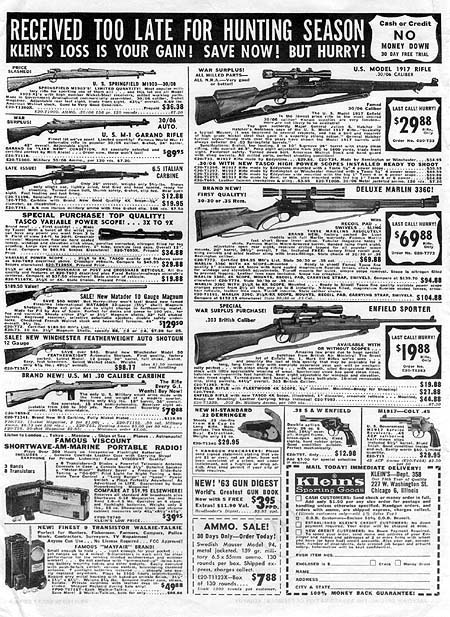
How Oswald got his rifle:


Interest Group Items
- Amnesty International v. Trump Policy on Asylum
- Public Citizen v. "Bougie Perks"
- Greenpeace v. Oreo Cookies
--------------------
Changes in Perceived Scope of Problem Triggers Attention, Which in Turn Triggers Higher Numbers
Children 3 to 21 years old with autism served under Individuals with Disabilities Education Act, Part B (numbers in thousands) Source: Digest of Education Statistics, various years.
Autistic children aged 3 to 21 receiving services under the Individuals with Disabilities Education Act (in thousands)

Problem Definition and Issue Emergence
Anthony Downs, "The Issue-Attention Cycle"
Guns and the politics of language
Gun culture
How Oswald got his rifle:

Subscribe to:
Posts (Atom)