Politico: "John Boehner's future as speaker in doubt"
Follow up to Cigler reading. The Tea Party has challenged the Speaker and his efforts to unite the GOP. The TP has refused to support Boehner's efforts, especially on issues like immigration and spending cuts, as Cigler mentions (127). While the threat to Boehner's future as Speaker may or may not be legit, the TP has contributed to the situation.
Wednesday, September 9, 2015

Tuesday, September 8, 2015
Types of Interest Groups
Businesses
Number of businesses

Where people actually work: in large enterprises (with 500+ employees)

Most Americans own stock:

Trade and Professional Associations
Number of businesses
Where people actually work: in large enterprises (with 500+ employees)

Most Americans own stock:
Trade and Professional Associations
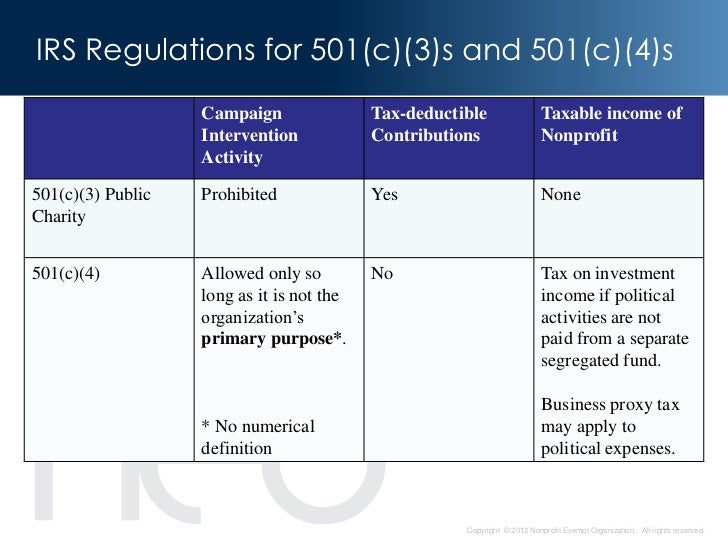
- In 2013, the IRS recognized 66,985 trade and professional associations
- Examples
- About a quarter of US workers need an occupational license, up from about 5 percent in the 1950s.
- In 2014, 7.2 million employees in the public sector belonged to a union, compared with 7.4 million workers in the private sector. The union membership rate for public-sector workers (35.7 percent) was substantially higher than the rate for private-sector workers (6.6 percent).
- Sometime surprising agendas
Non-economic
- In 2013, IRS recognized 1,052,495 charitable and philanthropic organizations
- Forms of organization
- 501(c)(3) groups can do some lobbying.
Conglomerates or "Families of Organizations"
Thursday, September 3, 2015
The Expanding Universe of Interest Groups
Lester Freamon explains how to research interest groups.
1980 14,726
Holyoke talks about a rise in the number of national associations. Check data from the Statistical Abstract of the United States (below).
1980 14,726
1990 22,289
1995 22,663
2000 21,840
2010 23,983
You might see something similar with political action committees (PACs).
Compare to trends in federal spending.
Note, however, that data on business enterprises have a different pattern.
Tuesday, September 1, 2015
Interest Groups: A First Cut
The First Amendment:
Congress shall make no law respecting an establishment of religion, or prohibiting the free exercise thereof; or abridging the freedom of speech, or of the press; or the right of the people peaceably to assemble, and to petition the Government for a redress of grievances.Mine Workers v. Illinois Bar Assn. 389 U.S. 217 (1967)
We start with the premise that the rights to assemble peaceably and to petition for a redress of grievances are among the most precious of the liberties safeguarded by the Bill of Rights. These rights, moreover, are intimately connected, both in origin and in purpose, with the other First Amendment rights of free speech and free press. "All these, though not identical, are inseparable."Thomas v. Collins, 323 U. S. 516, 323 U. S. 530 (1945). See De Jones v. Oregon, 299 U. S. 353, 299 U. S. 364 (1937). The First Amendment would, however, be a hollow promise if it left government free to destroy or erode its guarantees by indirect restraints so long as no law is passed that prohibits free speech, press, petition, or assembly as such. We have therefore repeatedly held that laws which actually affect the exercise of these vital rights cannot be sustained merely because they were enacted for the purpose of dealing with some evil within the State's legislative competence, or even because the laws do, in fact, provide a helpful means of dealing with such an evil. Schneider v. State, 308 U. S. 147 (1939); Cantwell v. Connecticut, 310 U. S. 296 (1940).Some data
Monday, December 3, 2012
Boom!
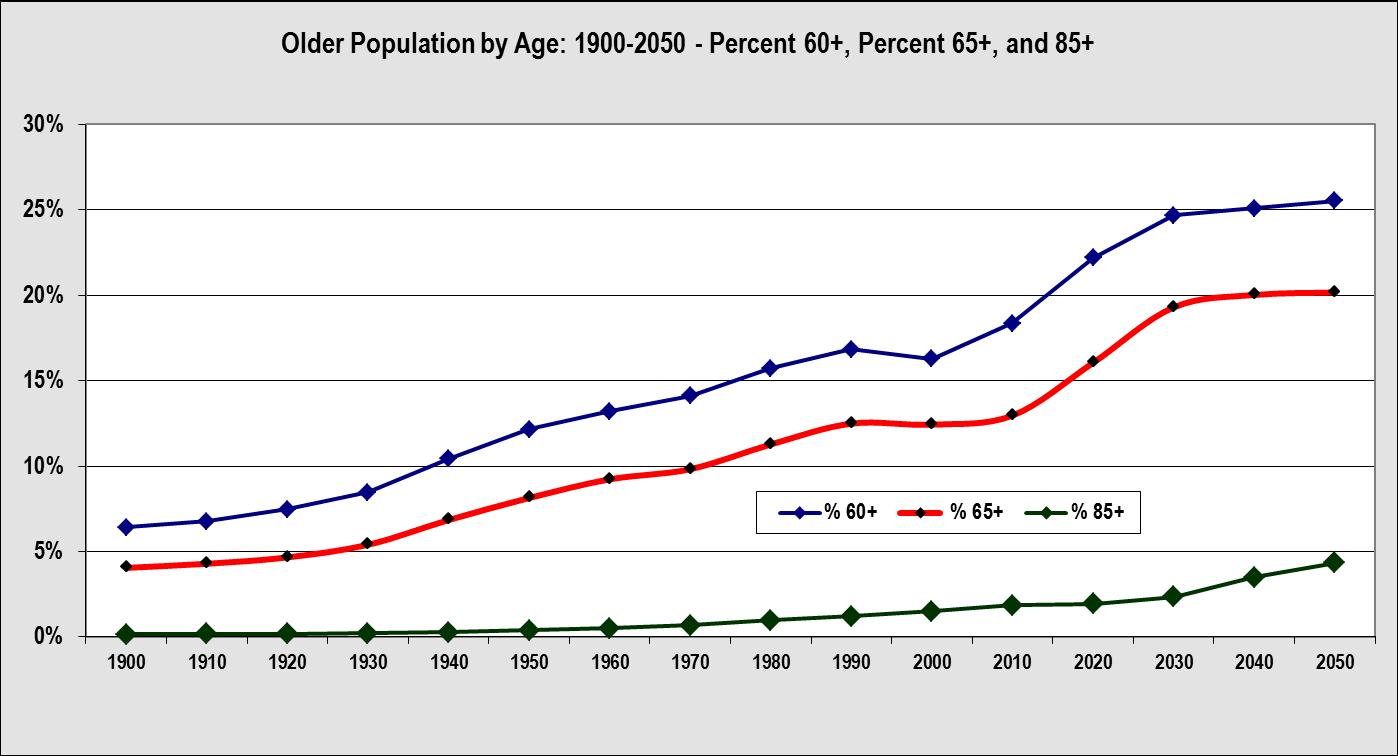
From: http://www.aoa.gov/aoaroot/aging_statistics/future_growth/future_growth.aspx


From: http://waysandmeans.house.gov/uploadedfiles/aarp_report_final_pdf_3_29_11.pdf
Workers per social security beneficiary

People retiring today are part of the first generation of workers who have paid more in Social Security taxes during their careers than they will receive in benefits after they retire. It's a historic shift that will only get worse for future retirees, according to an analysis by The Associated Press.
Previous generations got a much better bargain, mainly because payroll taxes were very low when Social Security was enacted in the 1930s and remained so for decades.
"For the early generations, it was an incredibly good deal," said Andrew Biggs, a former deputy Social Security commissioner who is now a scholar at the American Enterprise Institute. "The government gave you free money and getting free money is popular."
If you retired in 1960, you could expect to get back seven times more in benefits than you paid in Social Security taxes, and more if you were a low-income worker, as long you made it to age 78 for men and 81 for women.
As recently as 1985, workers at every income level could retire and expect to get more in benefits than they paid in Social Security taxes, though they didn't do quite as well as their parents and grandparents.
Not anymore
From: http://www.foxnews.com/politics/2012/08/07/new-retirees-receiving-less-in-social-security-than-paid-in-marking-historic/

From: http://www.brookings.edu/blogs/up-front/posts/2011/08/26-census-race-frey
Tuesday, November 27, 2012
The Interest Group Politics of Autism
Autism illustrates three major points about interest group politics:
Children 3 to 21 years old with autism served under Individuals with Disabilities Education Act, Part B (numbers in thousands) Source: Digest of Education Statistics, various years.

Peak Associations
Anti-Vaccine Activists
Pro-Science Groups
Self-Advocates
Professional Organizations
- Changes in the perceived extent of a problem lead to changes in interest group activity.
- Interest group activity on one issue may foster activity on related issues. In this case, the civil rights movement spawned the disability rights movement, which spawned the autism rights movement.
- Interest group activity on any issue is often full of factionalism and conflict among groups. In the case of autism, the conflict includes death threats.
The "Early History" of Autism
- 1943: American psychiatrist Leo Kanner publishes “Autistic Disturbances of Affective Contact” (Nervous Child 2 (1943): 217-250), identifying autism as a childhood psychiatric disorder.
- 1948: In another article, Kanner says that autistic children “were kept neatly in refrigerators which did not defrost.” Time popularizes the idea in an article titled "Frosted Children."
- 1959: Bruno Bettelheim publishes “Joey: A Mechanical Boy,” in Scientific American 200 (March 1959): 117-126. A condensed version reaches a larger audience through Reader's Digest. The article gains even more attention for the "refrigerator mother" theory.
- 1960: Armstrong Circle Theater presents “The HiddenWorld,” a highly favorable dramatization of Bettelheim's work, with actor Peter von Zerneck portraying Bettelheim.
- 1964: Bernard Rimland publishes Infantile Autism, a book summarizing current research and refuting the "refrigerator mother" theory.
- 1965: Psychologist Ole Ivar Lovaas develops the Applied Behavior
Analysis. The May 7 issue of Life gives it national publicity in
“Screams, Slaps, and Love: A Surprising,Shocking Treatment Helps Far-Gone Mental Cripples.”
- 1965: Rimland and 60 others form the National Society for Autistic Children (NSAC), later the Autism Society of America.
- 1967: Bettelheim publishes The Empty Fortress, a book expanding on his theory and criticizing Rimland. Bettelheim is a celebrity who gets many more readers.
The Disability Rights Movement and the Law
- 1973: Congress passes the Rehabilitation Act of 1973 (P.L. 93-112). Section 504 forbids discrimination against the handicapped "under any program or activity receiving federal financial assistance.” See chapter 4 of Fleischer and Zames.
- 1975: Congress passes the Education of All Handicapped Children Act (PL 94-142) requiring free, appropriate public education in the least restrictive setting. The law later gets the more familiar name of the Individuals with Disabilities Education Act. See chapter 11 of Flesicher and Zames.
- 1975: The Developmental Disabilities Assistance and Bill of Rights Act (P.L. 94-103) creates a "bill of rights" for persons with developmental disabilities, funds services, and establishes protection and advocacy organizations in each state. Because of lobbying by NSAC, it includes autism .
- 1982: The Rowley case (458 U. S. 176) narrows the scope of EAHCA. See p. 189 of Fleischer and Zames.
- 1987: Lovaas publishes a study reporting a 47 percent recovery rate with ABA.
- 1988: Rain Man introduces autism to millions of moviegoers.
- 1990: The Individuals with Disabilities Education Act Amendments (IDEA) (P.L. 101-476) renames the Education of the Handicapped Act and reauthorizes programs under the Act to improve support services. Autism becomes a separate category in IDEA for special education.
- 1994: The fourth edition of the Diagnostic and Statistical Manual (DSM-IV) expands the definition of autism.
- 1998: Dr. Andrew Wakefield and others publish a controversial study in the Lancet about MMR vaccinated children diagnosed with autism spectrum disorders.
- 2000: President Clinton signs the Children's Health Act, founding an autism research coordinating committee.
- 2002: Wakefield tells the House Government Reform and Oversight committee that there is “compelling evidence” of a link between vaccines and autism, even though studies have already discredited his research.
Autism Takes Off

The Interest Group Universe
Peak Associations
Anti-Vaccine Activists
Pro-Science Groups
Self-Advocates
Professional Organizations
Wednesday, October 10, 2012
Lobbying Clips
The American League of Lobbyists describes what its members do:
"Thank You for Smoking" took a different perspective:
A 60 Minutes interview with Jack Abramoff:
How the Medicare prescription drug bill passed:
Penn State lobbying:
Subscribe to:
Posts (Atom)